
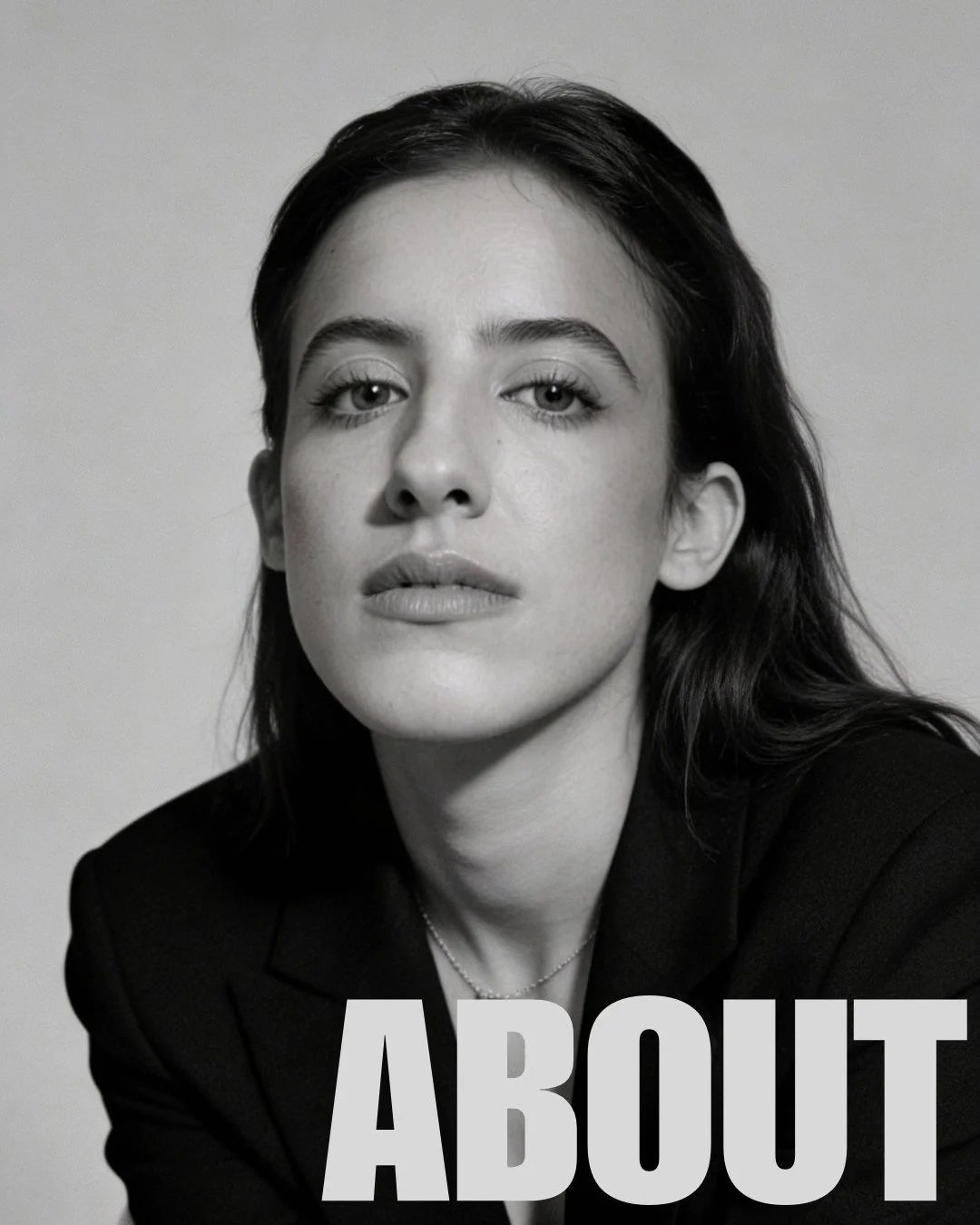
RAJA ALTHAIBANI
Strategic Advisory Working at the Intersection of Media, Power, and Accountability
Raja Althaibani is a strategist, advisor, and writer working at the intersection of media, technology, evidence, and power. Her work focuses on information integrity, digital evidence, online harms, extremism, and narrative systems — with deep expertise across the Middle East, North Africa, and global crisis contexts.
She advises organizations, media institutions, and leadership teams on how to operate, adapt, and make decisions under pressure in rapidly evolving information environments. She writes Unembedded and founded The Field, a cross-sector community of practice for practitioners working at this intersection.
Languages: English, Arabic
Base: Istanbul, Turkey; New York, United States
2024 Inaugural Peabody Global Impact Award recipient
For nearly two decades, Raja Althaibani has worked at the intersection of media, technology, evidence, and power — examining how they shape reporting, public narrative, accountability, and policy during crises and structural change.
Her work moves frontline knowledge and decentralized field practice into the center of institutional strategy, policy, and decision-making. She advises leaders, journalists, practitioners, and public-interest communities navigating high-stakes information environments — not only responding to harm, but helping institutions and networks anticipate change, strengthen judgment, and build systems that are more credible, adaptive, and fit for current conditions.
She has advised governments, international institutions, technology companies, and civil society organizations. She has provided expert testimony to the ICC, advised Google, Meta, and TikTok on content governance and digital rights, and co-developed field guides on video evidence, archiving, and documentation practice that remain in global use. She has trained thousands of journalists, investigators, and legal professionals across conflict and crisis contexts and raised millions in funding for accountability and documentation programs operating under some of the most constrained conditions in the world.
Previously, she spent more than fourteen years at WITNESS — a 2024 Peabody Award recipient for Global Impact — leading crisis-response models, capacity-building programs, and documentation strategies across MENA/SWANA and other high-risk contexts. That work shaped media practice, policy engagement, and accountability efforts related to Syria, Palestine, Yemen, Sudan, Iraq, Egypt, and Lebanon, among others.
Her areas of specialization include:
Information integrity and media systems * Online harms, extremism, and platform dynamics * Digital evidence and documentation ecosystems * Narrative strategy and public communication * Institutional adaptation and decision systems * Crisis response and operational strategy * AI, synthetic media, and the evidentiary record
Today her work centers on strategic advisory, field-shaping initiatives, and public-facing analysis. She writes Unembedded — sharp analysis at the intersection of media, harm, technology, and accountability—and founded The Field, a cross-sector community of practice for journalists, researchers, lawyers, advocates, and technologists working on these beats. She also publishes The Field Dispatch, a practitioner-facing resource series that translates analysis into field-ready tools and frameworks.
Through Arab Hyphenated, she extends this work into the cultural sphere, using identity, storytelling, and narrative strategy to challenge one-dimensional representations and expand the space for more layered, socially rooted forms of belonging and public imagination.
Her work proceeds from a single conviction: that the people closest to the harm understand it best, and that closing the gap between their knowledge and the institutions meant to act on it is not a secondary concern. It is the work.
Strategic Advisory · The Field · Unembedded · Arab Hyphenated · Contact
MY APPROACH
My approach is rooted in a unique trajectory: shifting from formal criminal justice training into the first generation of citizen journalism and new media field documentation, working at scale before the practice was formalized. This transition — from the frontlines to systems design — allows me to close the distance between theory and practice, designing approaches that break gatekeeping, redistribute capability, and enable meaningful innovation that works in the real world, not just on paper.
MY MISSION
My overall mission is to work at the intersection of power, emerging technology, and institutional adaptation to guide systems toward greater equity. I focus on de-gatekeeping the human rights and media landscape by shifting decision-making power away from large international institutions and into the hands of grassroots communities, independent practitioners, and frontline truth-tellers. My goal is to empower individuals to recognize their own narrative agency and take an active role in shaping the political and social systems that affect their lives.
The mission of Arab Hyphenated is to transform online community spaces and fashion into a vehicle for cultural connection, identity, reclaiming narratives, and justice.
WHAT I DO
STRATEGIC ADVISORY
I advise on media systems, technology, information integrity, digital evidence, crisis response, online harms, and accountability. My work has included helping organizations, practitioners, and cross-sector teams navigate documentation strategy, evidence preservation, platform harms, and emerging technology challenges.
DIGITAL EVIDENCE & ACCOUNTABILITY
I have worked extensively on how video, open-source information, and digital documentation can support justice, advocacy, and legal accountability. This includes practical methods for filming, preserving, verifying, archiving, and ethically using visual evidence in high-risk contexts.
TECH POLICY & PLATFORM ACCOUNTABILITY
My work has included advising on content moderation, community-guidelines issues, evidence preservation, documentation safety, platform bias, synthetic media, and the risks that automated systems pose to human rights documentation and public-interest evidence.
TRAINING & CAPACITY BUILDING
I have designed, led, contributed to, and supported trainings, workshops, lectures, and public educational resources for journalists, human rights defenders, investigators, lawyers, activists, and cross-disciplinary practitioners.
WRITING, ANALYSIS & PUBLIC ENGAGEMENT
I write and speak on media systems, online harms, digital trust, extremism, narrative power, platform accountability, and the changing relationship between technology, truth, and accountability. I write Unembedded — sharp analysis at the intersection of media, harm, technology, and power — and contribute to public debate through essays, interviews, expert commentary, and speaking engagements. My writing is practitioner-facing and evidence-based, designed to be useful to people doing the work rather than observing it.
FIELD REPORTING, DOCUMENTATION, AND STORY TELLING
My background includes frontline journalism, photography, video documentation, and citizen reporting during the Arab uprisings — particularly in Yemen, where I was among the first generation of citizen journalists working with a camera, an electricity generator, and a spotty signal before the practice had a name or an institutional framework. Later work expanded into visual documentation, testimony, and the role of images in advocacy, memory, and justice. That frontline formation shapes everything that follows: I understand the conditions under which documentation actually happens, and I design for those conditions rather than ideal ones.
PROFESSIONAL IMPACT & REGIONAL EXPERTISE (2011–2025)
KEY METRICS
1,100+ Media, Legal, and Human Rights Practitioners Trained
75+ Professional Trainings Conducted
200+ Speaking Engagements & Public Events
12+ Crisis & Rapid Responses Led
14 Years Leading MENA/SWANA Crisis Response, Documentation, and Capacity Building at WITNESS
2024 Inaugural Peabody Global Impact Award Recipient
Multilingual Practice — Arabic and English, with deep regional fluency across MENA/SWANA
MENA/SWANA REGIONAL FOOTPRINT
Extensive on-the-ground experience, crisis response leadership, and specialized resource development across the Middle East, North Africa, and Southwest Asia, including:
North Africa: Sudan, Egypt, Libya, Tunisia, Morocco, Western Sahara, Algeria
Levant: Palestine, Syria, Lebanon, Jordan, Israel
Gulf & Peninsula: Yemen, Saudi Arabia, UAE, Qatar, Bahrain, Kuwait, Iraq
Southwest Asia & diaspora contexts: Iran and MENA/SWANA diaspora communities globally
SELECTED WORK & REPRESENTATIVE CONTRIBUTIONS
Creator and co-creator of a large interdisciplinary library of resources and training materials — guides, methodologies, tip sheets, and subject-matter and region-specific training curricula for practitioners worldwide. Available in Arabic and English, with translations in multiple additional languages. Used by journalists, lawyers, investigators, human rights defenders, and accountability practitioners across more than 30 countries.
DIGITAL EVIDENCE & ACCOUNTABILITY
Video as Evidence Field Guide (Co-developer / Contributor / Co-creator) – The foundational manual for activists and lawyers on using video to secure justice. One of the most widely used practitioner resources in the field of human rights documentation.
Video as Evidence in the Media: Jurisprudence Report (Contributor / Facilitator) – (Contributor / Facilitator) Analysis of visual media in legal proceedings and the evidentiary standards shaping accountability. [View Interview with Pilnet.].
Berkeley Protocol on Digital Open Source Investigations (Peer Reviewer) – The first global standard for digital open-source evidence collection, developed in partnership with the UN Human Rights Office.
ICC Forum & Cyber Evidence (ICC Expert & Contributor) – Expert opinions on international debates regarding cyber evidence and emerging technology in international criminal law — at a moment when the communities I worked with had already developed the practice the institution was only beginning to theorize.
Justice and Accountability for SGBV (Contributor) – Specialized guidance on using video documentation for legal cases involving sexual and gender-based violence — one of the most under-resourced and highest-risk areas of accountability documentation.
CRISIS RESPONSE & REGIONAL DOCUMENTATION
Gaza Media Resources Platform (Co-Lead, and Creator) – Rapid-response hub providing verification, safety, and documentation tools for journalists and documenters operating in Gaza — built under active conflict conditions, for practitioners bearing witness under fire.
Perpetrator Video in MENA (Creator / Expert) – Pioneering research and emerging practice and tech on the ethical, legal, and evidentiary challenges of open source footage captured by perpetrators — a question that sits at the intersection of accountability, platform governance, and evidence law.
Filming the Aftermath of Aerial Attacks (Creator / Lead Expert) – Field guidance for documenting munitions, structural damage, and the physical evidence of attacks. Guides, tip sheets, and training materials developed for practitioners in active conflict zones.
Trapped in the Gulf: Exposing Migrant Abuse (Creator / Lead Expert) – A series on the kafala system and migrant rights across the Gulf — documenting systemic labor exploitation through a human rights documentation lens.
Regional Documentation Guides (Creator / Lead Expert) – Documentation, reporting, archiving, and tech policy resources and training curricula tailored to the specific legal, political, and operational constraints of the MENA region.
FIELD GUIDES & PRACTITIONER RESOURCES
Activists’ Guide to Archiving Video (Coordinator / Contributor) – Region-specific curricula for long-term digital preservation — designed for practitioners who cannot rely on institutional infrastructure to protect the record.
How to Film Protests (Co-creator) – Video series on safe and effective documentation techniques in high-risk environments — practical, field-tested, and designed for people who need it before the protest starts, not after.
Well-being & Vicarious Trauma (Creator / Expert) – Ethics-focused strategy, guidance, and support resources for researchers, documenters, and practitioners working regularly with graphic, traumatic, and high-stakes imagery. Tailored planning and resources for regional partners.
Digital Safety & Anti-Doxxing (Co-creator)) – Context specific protection resources for human rights defenders facing surveillance, harassment, and targeted exposure — designed for the specific threat landscape of frontline digital practice.
WITNESS Tip Sheets (Creator / Co-creator) – Actionable technical guidance for human rights documenters globally — short, practical, field-tested, and available in multiple languages.
A full library of resources developed between 2011 and 2025 is available on request. Most resources are available in Arabic and English, with translations in multiple additional languages. Used by practitioners across more than 30 countries.
SPEAKING, TRAININGS, AND CONVENINGS
Raja Althaibani speaks, teaches, and facilitates across academic institutions, newsrooms, legal forums, policy bodies, technology companies, and practitioner communities worldwide. Her sessions are evidence-based, field-tested, and designed for audiences who need to apply what they hear — not just hear it.
Areas of expertise:
Information integrity and media systems · Digital evidence and accountability · Technology policy and platform accountability · Human rights documentation practice · Open-source investigations · Online harms, extremism, and radicalization · Eyewitness and perpetrator video · Crisis reporting and documentation ethics · Narrative power and media strategy · MENA media, rights, and regional contexts
Formats: Keynotes · Expert panels · Practitioner workshops · University lectures · Institutional training programs · Conference facilitation · Crisis simulations · Community of practice sessions
Languages: English · Arabic
For speaking and training inquiries: inquiries@rajaalthaibani.com · rajaalthaibani.com/contac
Dedication
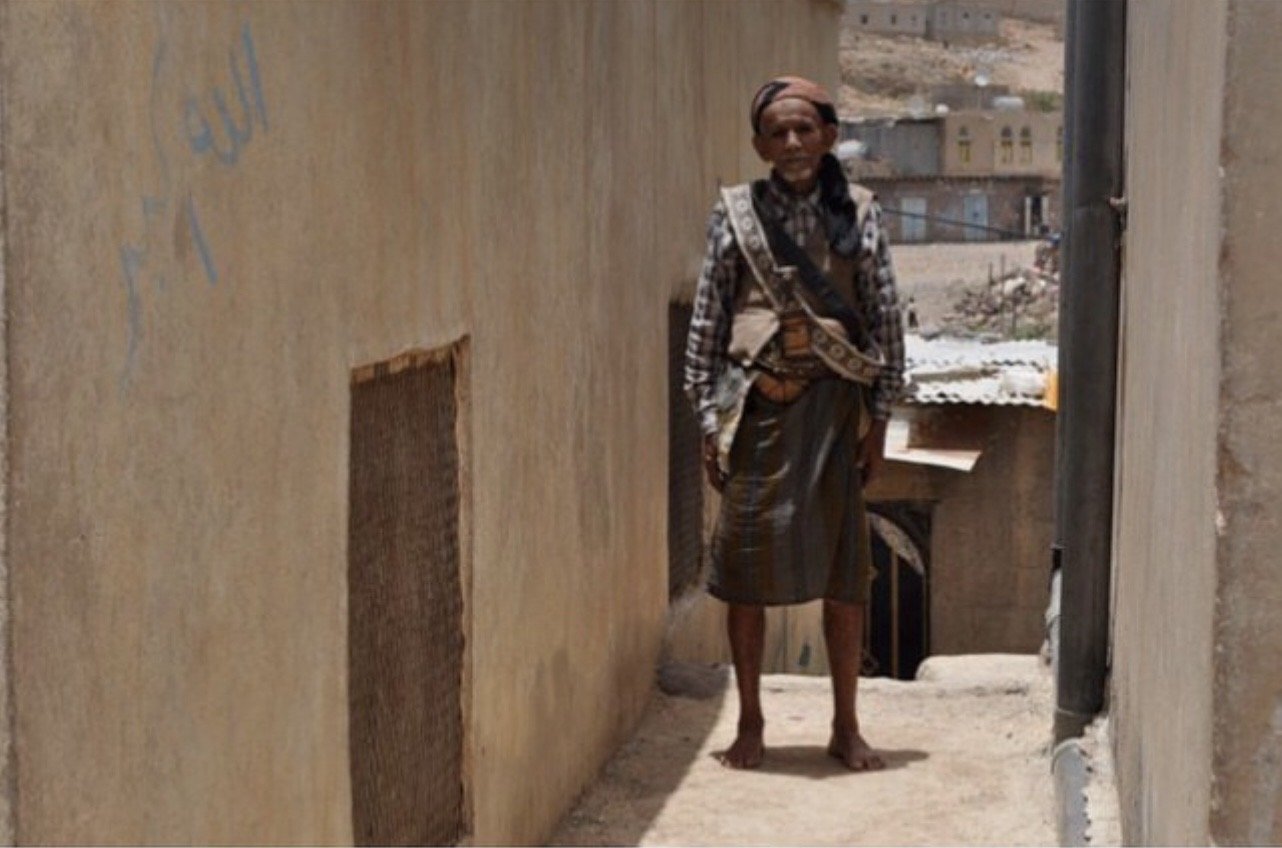
This work is dedicated to the men and women who carried responsibility before us, often without recognition, formal power, or written record, so others could inherit, build, and endure.
In particular, it honors my grandfather, Al-Thaly, an elder in my family lineage and a tribal mediator in Yemen. Though illiterate, he spent decades preventing conflict between tribes and community members, upholding integrity, restraint, and accountability in contexts where state systems often failed to maintain peace or cohesion.
When formal structures fractured, responsibility did not disappear. It emerged, reclaimed by those who truly own it, and those most equipped to carry it.
That lineage shapes how I understand authority, trust, strategy, perseverance, and true impact today. True authority does not rest in titles, institutional polish, or branding. It rests in judgment, credibility, and stewardship.
The most durable systems are not the ones that appear strongest; they are the ones sustained by people capable of responsibility when it matters, for the people it truly matters to.
This work carries that legacy forward: honoring those who practiced responsibility without reward, for the collective, and preparing those who will inherit strained systems to do the same.
With integrity. Thank you, Jadu. الله يرحمك
*** Work spans strategic advisory, training and capacity, information and media, and digital evidence systems, online harms and AI