
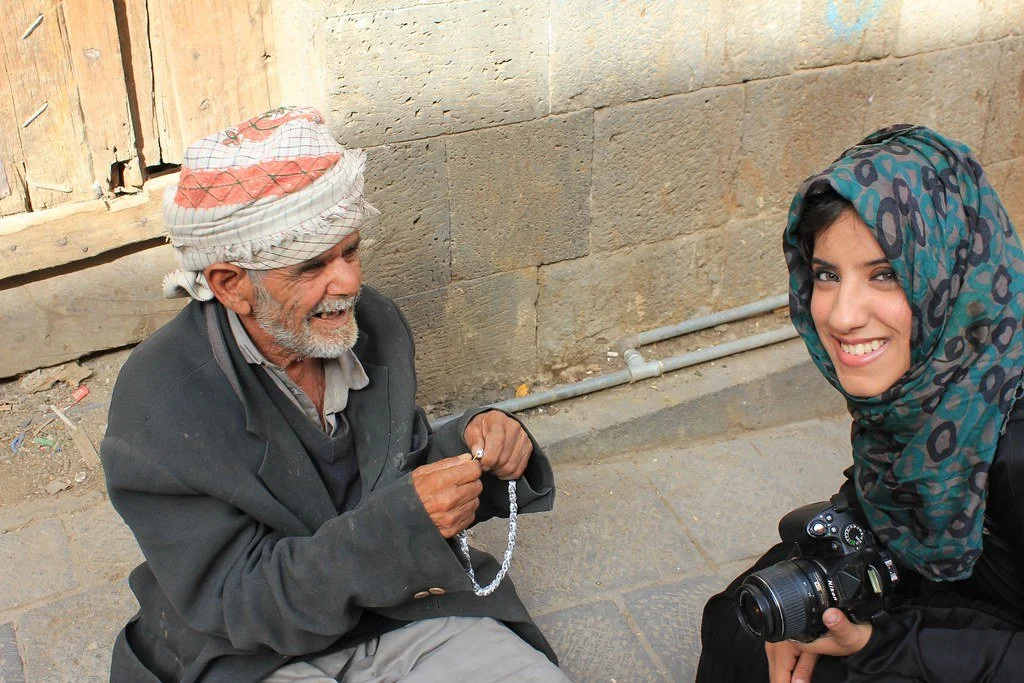
BUILDING PRACTICE, INFRASTRUCTURE, AND
COMMUNITY
I help leaders and practitioners make decisions that hold up in reality, especially when institutions are strained, information is contested, and the cost of error is human.
TURN INTO CIRCLES , design elements across page, linear one line (or just have :
Former senior leader at WITNESS (Video for Justice)
Built global crisis-response + digital evidence practice across high-risk contexts
Published in TIME, The New Yorker, Foreign Policy (and others)
Contributed to the Berkeley Protocol on Digital Open Source Investigations (UN OHCHR / UC Berkeley)
“Trained thousands of investigators/journalists/defenders globally.
ADD SCROLLNG LOGOS OF ENTITIES IVE WORKED WITH
Pull quote
About
SYSTEMS • PRACTICE • ACCOUNTABILITY
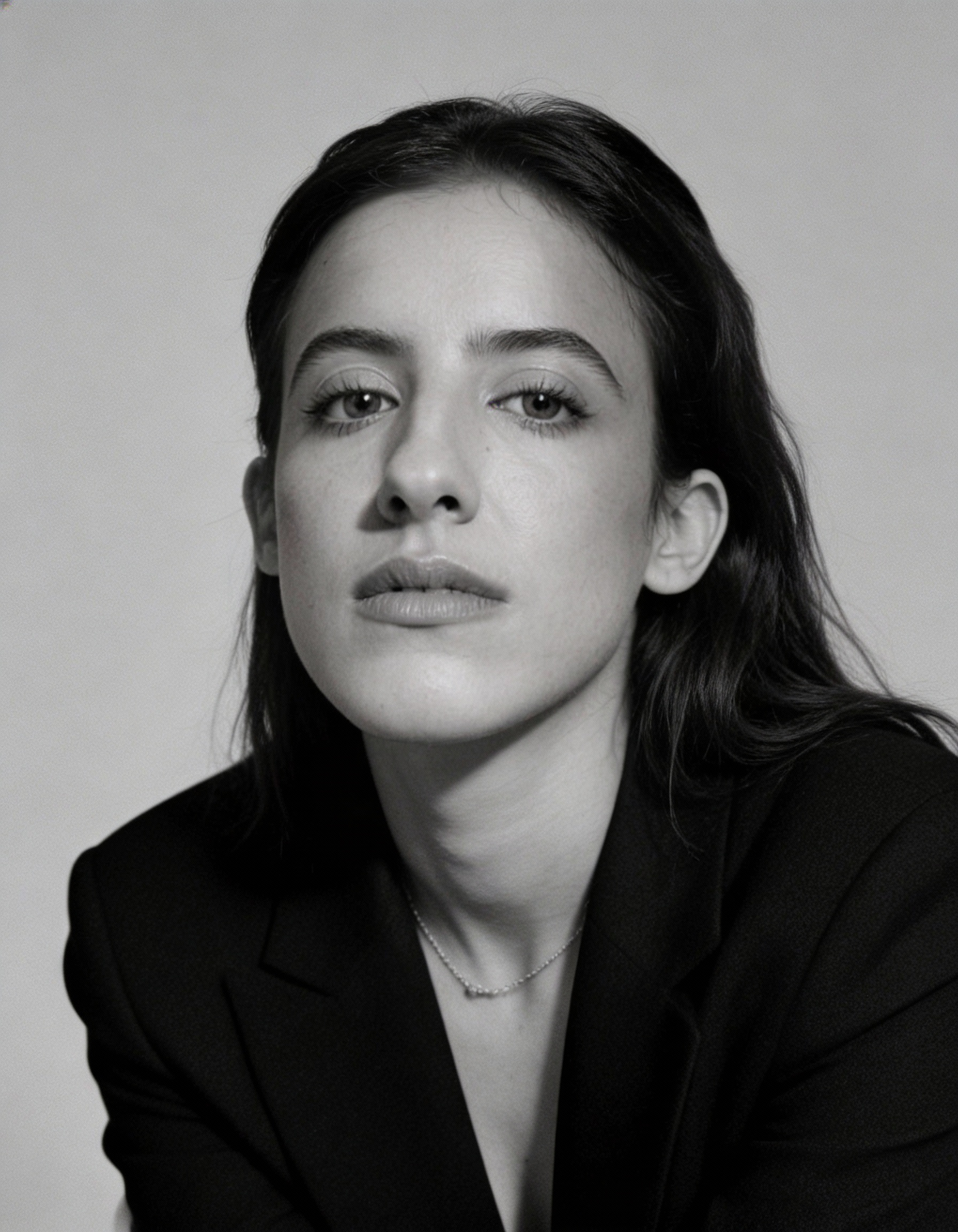
RAJA ALTHAIBANI
I help leaders and practitioners make decisions that hold up in reality, especially when institutions are strained, information is contested, and the cost of error is human.
I’m a first-generation Yemeni American, born and raised in Brooklyn, from communities that have long lived with the downstream cost of system failure: unequal protection, selective enforcement, criminalization, displacement, and institutions that respond too late, for the wrong reasons, or not at all.
That proximity to consequence shapes my work and mission. That foundation shaped a core belief: systems do not fail in abstraction; they fail in practice, in people’s lives. [TBD: edit:" I have witnessed firsthand both professionally and personally that systems do not fail in abstraction, they fail in people’s lives. And that systems don’t fail, it’s people who make it fail/ work/ adapt etc]
My work sits at the intersection of systems, practice, and lived consequence. I support leaders, practitioners, and institutions operating where decisions carry legal, political, and human cost—strengthening judgment, coordination, accountability, and operational resilience under pressure.
For more than 15 years, I’ve worked across governance, media, justice, and technology ecosystems in high-risk and marginalized contexts. I began in frontline documentation during the early digital transition—where evidence, narrative, and power determine what becomes visible, actionable, and prosecutable. That foundation shaped a core belief: systems do not fail in abstraction; they fail in practice, in people’s lives.
Over time, my work expanded into systems strategy: rebuilding connective tissue between field practice, institutional frameworks, and communities of practice. I’ve advised governments, international institutions, civil society networks, and media organizations while designing practitioner-led, community-centered approaches that hold under real conditions. Much of my work bridges institutional decision environments with the operators closest to impact—translating lived expertise into governance, policy, and operational infrastructure.
What distinguishes my practice is proximity to consequence and a commitment to human-centered systems: less gatekeeping, more shared capability. I work where inherited models stop holding, where authority is misaligned with execution, and where emerging technologies introduce risk faster than institutions adapt. My focus isn’t disruption for its own sake—it’s durability: building systems that can self-correct, distribute responsibility without losing accountability, and evolve instead of repeating inherited failure.
Emerging technology—including AI and digital evidence systems—is part of this work, but never as an automatic solution. I focus on ethical deployment: governance that reduces harm, strengthens accountability, and ensures tools expand human agency rather than distort responsibility.
Today, my work increasingly supports generational transition: new actors are inheriting systems shaped by fragmentation, rapid technological change, and declining public trust. I help institutions and practitioners fortify what must endure, redesign what no longer works, and build infrastructure future leaders can extend rather than repair.
This practice also informs a broader platform devoted to strengthening communities of practice, cultural infrastructure, and public understanding of how systems shape everyday life—so more people have the knowledge, tools, and access to influence the structures that govern them.
I work inside complexity, where consequence is real and responsibility cannot be deferred, managed, or distanced.
summary, abstract:
Grounded in nearly two decades of experience across MENA/SWANA, the United States, and Western institutional contexts, my work brings together regional expertise, strategic analysis and forecasting, field-based practice, and the safe, ethical use of emerging technologies—including audiovisual methods, digital evidence, and generative AI—to strengthen media, journalism, information ecosystems, documentation, accountability, and the practical application of international legal frameworks. Delivered in both Arabic and English, my work is shaped by long-range regional perspective, operational depth, direct field and independent practice, and senior institutional leadership experience developed through major events and shifts across these regions. This rare interdisciplinary and cross-sector range, grounded in sustained real-world application and adaptation, allows me to work asymmetrically across levels—with agility, depth, and judgment—from frontline realities and practitioner needs to institutional strategy, coordination, and long-range analysis.
Move the rest into cards like this:
REGIONAL + CROSS-CONTEXT DEPTH
Nearly two decades across MENA/SWANA, the U.S., and Western institutional contexts
FIELD + APPLIED PRACTICE
Direct field and independent practice grounded in real-world adaptation
LEADERSHIP + OPERATIONAL RANGE
Senior institutional leadership across teams, responses, and strategy
EMERGING TOOLS + SECTOR APPLICATION
Audiovisual methods, digital evidence, and generative AI applied safely and ethically
HOW I WORK
I work at points of rupture, when inherited models stop holding and decisions must be made under constraint. Each engagement is diagnostic and buildable. I map:
Where judgment is breaking down
Where coordination protects hierarchy over function
Where practice has drifted from reality
Where accountability is being outsourced
Then I install minimum-viable structures that teams can carry forward: safeguards, decision frameworks, operational standards, and connective tissue across silos. The aim is not a report, but to provide usable infrastructure.
SELECTED WORK
-
Led regional and global digital evidence, advocacy, and crisis-response programs building multi-country infrastructure for investigators, journalists, and legal actors operating in conflict and high-risk environments.
Designed and deployed rapid-response models during peak geopolitical crises, strengthening information resilience, cross-regional coordination, and emergency evidence preservation.
-
Developed documentation, digital evidence, and information integrity frameworks now used by frontline investigators and accountability practitioners, as well as regional and international institutions.
Authored and contributed to field guides and practice standards shaping how audio-visual evidence is collected, verified, and used in investigative, journalistic, and legal contexts.
-
Built and sustained cross-regional communities of practice across SWANA and beyond, connecting field practitioners with institutional ecosystems, media networks, and justice mechanisms.
Designed practitioner training architectures for high-risk documentation environments, delivering tools and methodologies to thousands of journalists, investigators, and human rights defenders globally.
-
Integrated ethical innovation and governance into information-sharing and digital evidence workflows, influencing standards around open-source content and perpetrator documentation.
Advanced governance models for responsible emerging technology deployment at the intersection of AI, media ecosystems, and human rights practice.
-
Provided expert guidance featured in major global media, shaping public understanding of digital evidence, crisis accountability, and emerging investigative practice.
Some engagements operate in high-risk or politically sensitive environments where public documentation would compromise partners or outcomes. References and selected work samples are available privately upon request.
Dedication
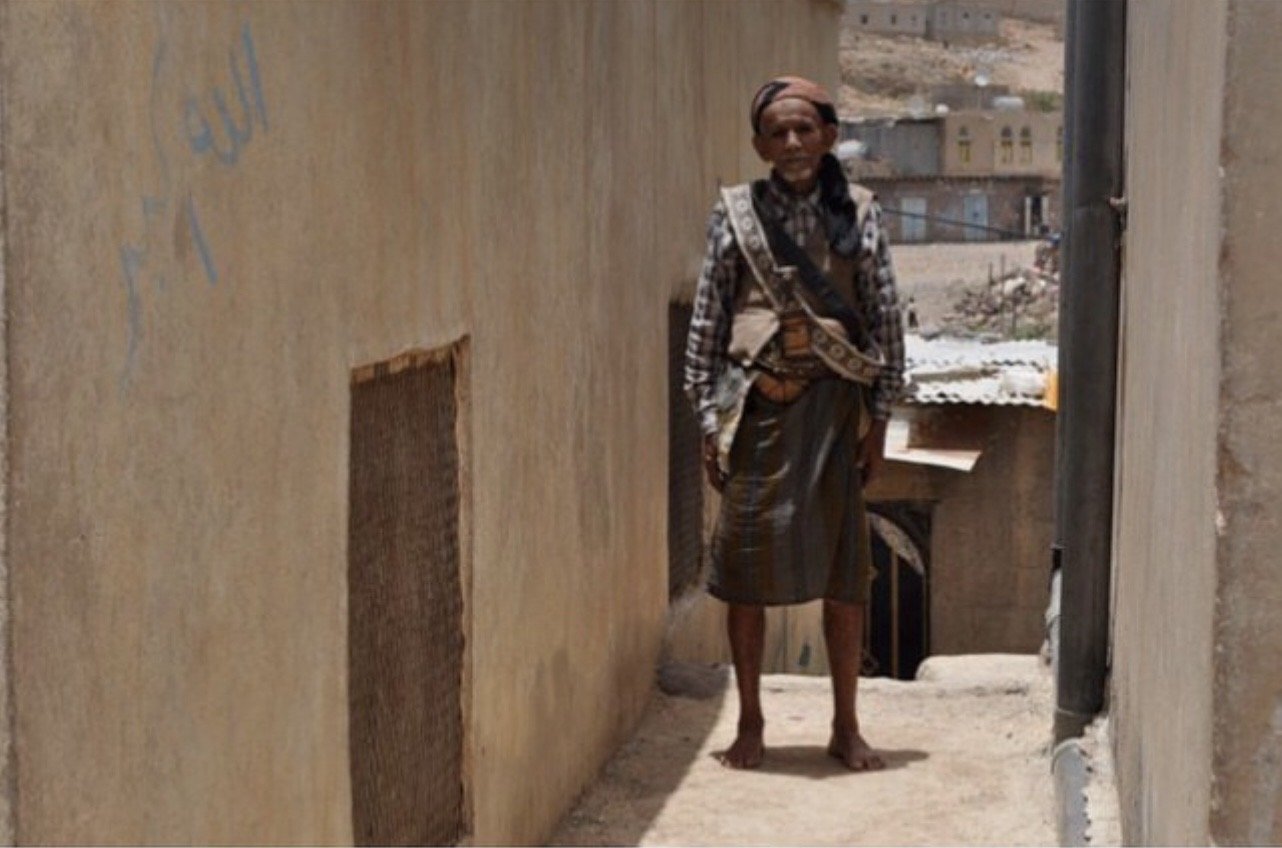
This work is dedicated to the men and women who carried responsibility before us, often without recognition, formal power, or written record, so others could inherit, build, and endure.
In particular, it honors my grandfather, Al-Thaly, an elder in my family lineage and a tribal mediator in Yemen. Though illiterate, he spent decades preventing conflict between tribes and community members, upholding integrity, restraint, and accountability in contexts where state systems often failed to maintain peace or cohesion.
When formal structures fractured, responsibility did not disappear. It moved to those willing to carry it.
That lineage shapes how I understand authority today. True authority does not rest in title alone. It rests in judgment, credibility, and stewardship under pressure.
The most durable systems are not the ones that appear strongest. They are the ones sustained by people capable of responsibility when it matters.
This work carries that legacy forward: honoring those who practiced responsibility without reward, and preparing those who will inherit strained systems to do the same.